Showing posts with label F-Stop. Show all posts

Monday, January 6, 2014

Top 5 Informational Photography Posts on Boost Your Photography

http://www.boostyourphotography.com/2014/01/top5-aboutphotography.html

This second post in our Top 5 countdown of Top 5 posts will feature the Top 5 Informational Photography Posts from 2013 on Boost Your Photography. (Yesterday's post was The Top 5 Travel Photography Posts of 2013.)  Many of these posts were featured as part of our series geared toward beginners, variously subtitled "Things Experts Forget to Tell You" or "Things that Your Forgot You Had to Learn." While many of these posts are geared towards photographers who are first learning how to use their DSLR camera, even those of us more experienced photographers may find something of value.

#5: Keeping Your Camera and Sensor Clean

http://www.boostyourphotography.com/2013/08/clean-camera.html

Camera maintenance is a critically important, and often overlooked, part of photography. Your camera is constantly exposed to different situations, weather, and circumstances, all of which can negatively impact your photographs down the line. Read about Keeping Your Camera and Sensor Clean to learn how best to protect yourself and your camera, and how to deal with the expected and unexpected hazards along the way.


http://www.boostyourphotography.com/2013/06/all-about-exposure.html

This two part series on exposure included All about Exposure and More on Exposure: how to fix common exposure problems. Exposure is a complicated topic, and entire books have been written about it. (One such book, Understanding Exposure, was included in my list of favorite photography books and authors.) These two posts provide a thorough introduction to the topic of exposure, including a discussion of correct and creative exposure. You will also find advice for getting the right exposure in a given circumstance and tricks like using the AE Lock button or bracketing your shots (as shown in the moon shots, above).

#3: How Long Does Your Camera's Battery Last?

http://www.boostyourphotography.com/2013/07/battery-life.html

Your camera's battery is essential. Do you know how long your camera's battery will last? This post explains a simple method for finding out (hinted at in the photos above), as well as practical advice for maintaining battery life and keeping your batteries working well for a long time.

#2: Why Won't My Lens Focus?

http://www.boostyourphotography.com/2013/05/why-wont-my-lens-focus.html

Focus was one of the issues I struggled with immediately when I started using my DSLR for the first time. Turned out that I was missing out on some very basic facts about lenses and focusing that could have cleared up a lot of my problems immediately. This post explores the importance of focusing, where to focus, and why your lens might not focus when you think it should.

#1: Aperture and the F/Stop Conundrum

http://www.boostyourphotography.com/2013/09/aperture.html

The number one Informational Photography Post on Boost Your Photography was Aperture and the F/Stop Conundrum, the first in a series of four posts about aperture. The rest of the posts covered What an Aperture of F/1.8 Can Do for You, What an Aperture of F/22 Can Do for You, and the Middle Range Apertures: f/8 to f/11.

For a very long time, I found the language used around aperture to be very confusing: the bigger vs. smaller, wider vs. narrower, shallower vs. wider depth of field all served to deepen my confusion instead of my understanding. This series of posts sought to alleviate this confusion and explain the f/stop conundrum once and for all.

Missed one of the Top 5 Top 5 posts?


Boost Your Photography: Learn Your DSLR is now available from Amazon. Get the most out of your camera with practical advice about the technical and creative aspects of DSLR photography that will have you taking beautiful pictures right away.

Saturday, October 5, 2013

Camera Lenses: What's in a Name?

Learn Your Camera Lens: What's in a Name | Boost Your Photography
If you have ever considered purchasing a camera lens, you may have noticed that the names of lenses often run to quite long lengths and contain whole lists of seemingly impenetrable numbers, letters, and abbreviations. This article will provide an overview about camera lenses, including an explanation of the different features and functions available on lenses.  Part 2 will cover the lens itself: all about your lens and how to get the most out of it and its features, and part 3 will cover recommended lens-related accessories.

Canon T1i and the Tamron 18-270 mm f/3.5-6.3 Di II VC PZD (say that five times fast).
The full name of your lens gives you significant information about the features available with that lens. Lens names usually consist of four features: the brand, the range of focal lengths, the range of apertures, and abbreviations for important individual features.

Brand

There are many brands of camera lenses. Some brands, like Canon, Nikon, Sony, and Olympus, make lenses that are designed to be used with their own brand of camera bodies. Other brands, like Sigma and Tamron, make lenses that are designed to be used on a variety of different camera bodies. Most of these lenses are sold in different 'mounts,' so you need to purchase the mount that matches the brand of your camera. It is also possible to buy small adapters that allow you to use a camera lens with one mount on a camera body with another style of mount.

Some photographers are quite strict about only buying lenses made by the same company as their camera, while others appreciate the functionality and cost of other brands. 'Off-brand' lenses, like those by Sigma and Tamron, are often cheaper than their brand-name counterparts and are highly regarded. Reading a site like dpreview.com provides specific reviews and technical comparisons of different lenses and brands.

Focal Length

The second defining feature of a camera lens is the focal length or lengths. Focal length defines the view available from a given lens. Wide angle lenses often have focal lengths in the range of 11 to 18 mm, while zoom lenses have focal lengths into the 100s, with 200 mm being common and ranges like 400 to 600 mm as much more specialized. In between, of course, are what many think of as the 'standard' focal lengths, like 35 mm and 50 mm, which are considered to be the best approximation of the field of view that matches what we normally see and perceive with our eyes.
Comparison of the field of view of a wide focal length (18 mm) and a narrow, zoomed-in focal length (270 mm).

Lenses are divided into two categories based on focal length. A prime lens offers only one focal length, while a zoom lens offers a range of focal lengths. (While slightly confusing, a zoom lens can offer a range of lengths on the wider end, like 18-55 mm or 11-14 mm, that do not offer a 'zoomed in' view of the scene. Here, 'zoom' refers to the ability of the lens to change focal lengths.)

Prime lenses benefit from being smaller, lighter, and more compact. They generally offer a wider range of aperture values (read What an Aperture of F/1.8 Can Do for You to learn about the benefits of a wide aperture). Zoom lenses are often larger and heavier but give you a variety of options about how to compose and frame your image from a single vantage. If you want to 'zoom in' with a prime lens, you need to do it with your feet. (Read Remember the Background and Move Your Feet and Zooming vs. Cropping: perspective in photography.)

Aperture

Another feature of lens names is the inclusion of the widest aperture value or values available for that lens. (For more on aperture, read our series, Aperture and the F/Stop Conundrum, and the specific articles about wide apertures, narrow apertures, and the 'who cares?' apertures.) For prime lenses, this will be a single number, such as f/1.8 or f/1.2. For zoom lenses, this may be a single number, such as f/2.8, which means that this aperture is available at any of the focal lengths for that lens. More commonly, zoom lenses have a range of aperture values, such as f/3.5-5.6, which means that f/3.5 is available for the widest focal length, while f/5.6 is the widest aperture available for the narrowest focal length.

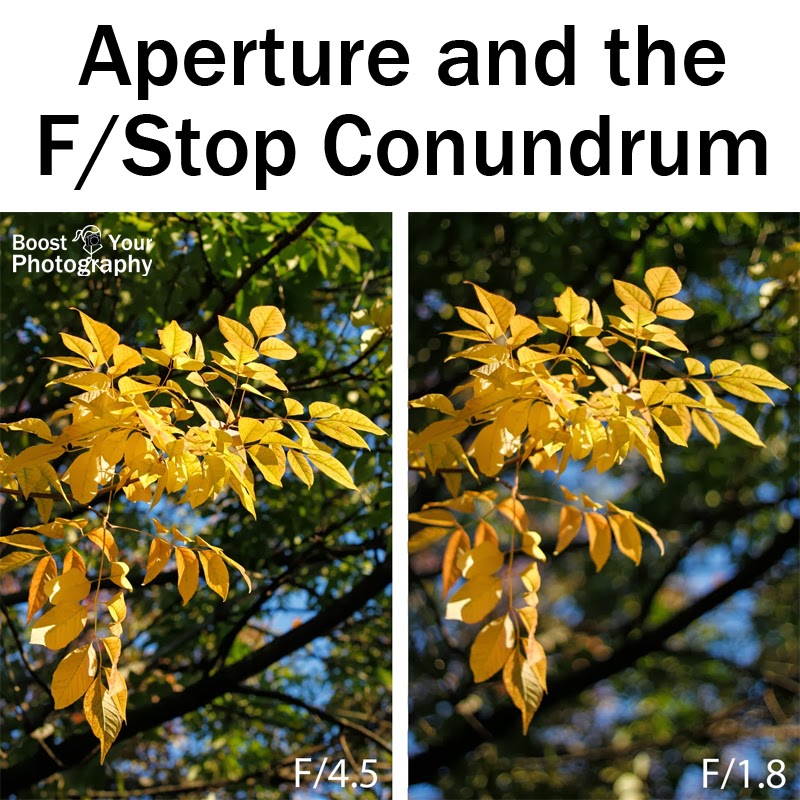
Comparison of the impact of aperture f/4.5 and f/1.8

Abbreviations

The rest of the information in the name of your camera lens is abbreviations for certain features and functions of that lens. The most relevant of these abbreviations is the one that indicates whether you have a stabilized lens or not. A stabilized lens helps your camera compensate for the movements you make when hand-holding your camera and allows you to shoot stable photographs at slower shutter speeds than a non-stabilized lens. In most situations, it is worth the extra money to invest in stabilized lenses. The abbreviations for a stabilized lens include IS (image stabilization for Canon), VR (vibration reduction for Nikon), or VC (vibration control for Tamron). Despite the different abbreviations by brand, they refer to the same feature. The rest of the relevant abbreviations will be explained in more detail in the examples below.
An exaggeration of the impact of camera shake. This was shot hand-held for 1-second from a canoe.  The movement in the lines was caused by my hands and the canoe moving.

No Longer 'Lost in Translation'

To help you put it all together, here are a few examples of lens names with translation.

Many Canon Rebels ship with the Canon EF-S 18-55 mm f/3.5-5.6 IS II SLR lens, and many entry-level Nikon cameras ship with the Nikon 18-55mm f/3.5-5.6G AF-S DX VR Nikkor Zoom Lens.
  • Canon EF-S is the brand of the lens (Canon) and the indicator that it works only on crop sensor cameras. Nikon is the brand of the lens (Nikon) and the DX is the indicator that it works only on crop sensor cameras. (Full frame cameras are a significant investment and use more expensive lenses as well.)
  • 18-55 mm indicates the focal range of the lens. Both lenses can shoot from wide angle (18 mm) to a more zoomed in 55 mm.
  • F/3.5-5.6 indicates the aperture range of the lens. For these lenses, it means that you have a maximum wide aperture of f/3.5 at 18 mm but only f/5.6 at 55 mm.
  • IS stands for image stabilization and VR stands for vibration reduction. These indicate that both of these are a stabilized lenses.
  • II means that this is the second version of this lens, and SLR means that is it for single-lens reflex cameras. AF-S is the name of the silent motor in the Nikon lens. Nikkor is the higher level brand of lens for Nikon cameras. Zoom lens means that it has more than one focal length available.


When upgrading from a kit lens, many photographers choose a 50 mm lens for their next purchase, such as the Canon EF 50 mm f/1.8 II or the Nikon 50 mm f/1.8D AF Nikkor lens.
  • Canon EF means that this lens will work with both crop and full frame sensors, and Nikon/Nikkor AF means the same.
  • 50 mm is the focal length of the lens. This is a prime lens, as it has only the one focal length, not a range like in the zoom lenses above.
  • F/1.8 is the maximum aperture opening available. Read more about what f/1.8 can do for you.
  • II means that this is the second version of this lens for Canon.
  • Neither of these lens offer image stabilization / vibration reduction, because the wide aperture of f/1.8 means that you can reasonably hand-hold this lens at many shutter speeds.

My next lens purchase, after the 50 mm, was the Tamron 18-270 mm f/3.5-6.3 Di II VC PZD. This is the 'walkaround' lens that is on my camera the majority of the time. Tamron also makes a 70-200 mm f/2.8 DI VC USD.

  • Tamron is a third-party lens and is sold in different mounts for Canon, Nikon, and Sony cameras. The Di II means that it will work only with crop sensor cameras.
  • 18-270 mm indicates the focal range of the lens. This lens can shoot from wide angle (18 mm) to a substantial zoom of 270 mm.
  • F/3.5-6.3 indicates the aperture range of the lens. For this lens, it means that you have a maximum wide aperture of f/3.5 at 18 mm and of f/6.3 at 270 mm.
  • VC stands for vibration control and works the same as IS (Canon) and VR (Nikon) lenses to help you hand-hold your lens more successfully.
  • PZD is for the Piezo Drive motor that runs the lens.

A difference in just a few letters can translate to a big difference in price, so it is important to know exactly which lens features you need and want. For example, the highly regarded Canon EF 100mm f/2.8 Macro USM Lens costs around $600 USD, while its image stabilized counterpart, the Canon EF 100mm f/2.8L IS USM Macro Lens, runs nearly twice that at $1,050 USD. If you are planning on shooting all your macro shots with a tripod, then you might not choose to pay for the image stabilization, but if you are going to be chasing rapidly moving subjects like butterflies or insects and want to hand-hand the camera, then you have a pricey decision to make. (Want to achieve macro or close-up photographs without either of these expensive lenses? Check out my series of articles on macro and close-up photography.)

Summary: what's in a name for camera lenses

There are a lot of factors to consider when purchasing a lens, and it is important to know what all of the information in the name means. Take some time to look at the lenses that you already have and see what features, apertures, and focal lengths you have at your disposal. The next article in this series will take a look at lenses themselves and talk through each of the different buttons, adjustable rings, and other features to help you get the most out of the lenses you already have. The third article will cover recommended lens-related accessories.


Want to learn more? Boost Your Photography: Learn Your DSLR is now available from Amazon. Get the most out of your camera with practical advice about the technical and creative aspects of DSLR photography that will have you taking beautiful pictures right away.

Wednesday, September 11, 2013

Aperture and the F/Stop Conundrum

When I first upgraded to my DSLR camera and started using it extensively, I found myself facing a whole variety of problems, and for many of them, I couldn’t find easy solutions online or in any of my beginning photography books. I realized much later that some of these problems were so basic and fundamental that experts who had been shooting for a long time had likely forgotten that they had ever not known how to do such things.

Aperture and the F/Stop Conundrum | Boost Your Photography

This is another article in an occasional series aimed at beginners called “Things Experts Forgot to Tell You” or “Things that You Forgot you had to Learn.” (Previous articles include Why Won’t My Lens Focus?All about Exposure, and More about Exposure: how to fix common exposure problems.) Maybe you’ve just purchased your first DSLR camera or perhaps you’ve had one sitting around for awhile that you’ve been meaning to start using.  The next big steps are getting out there, figuring out what you and your camera are capable of, and learning where to get answers to your questions. While the first two steps are up to you, this series is an attempt to briefly cover some of the questions that might not have yet occurred to you to ask.


Aperture controls how much of your image is in focus. These leaves were shot at f/3.8.
Fall Leaves at F/3.8 by Archaeofrog on Flickr

Aperture, F/Stops, and the Difficulty of Talking about Fractions

Aperture is a value, expressed in a unit called f/stops, that refers to the relative size of the opening of your lens when you take a photograph. The bigger the opening, the more light that your camera lets in and the smaller the depth of field (the area of the subject in focus). The smaller the opening, the less light that you camera lets in, but the greater the depth of field (the more of your image that will be in focus). There was a brief discussion of the impact of aperture in the article Remember the Background and Move Your Feet.
Crab Apples at f/1.8 (left) and Close-Up Rose at f/22 (right)
In the images above, the left-hand image of the crab apple blossoms was shot with a wide aperture (f/1.8), which resulted in a very narrow slice of the photograph being in focus. As the further back flowers rapidly fall out of focus, the light on the very background flowers becomes merely giant circles or bokeh as they are known in photography. The right-hand image of the rose was shot with a narrow aperture (f/22), which resulted in the depth of field (the area in focus) extending through the entire image.

Here's what kept me confused about aperture for the longest time when I started getting serious about my photography and particularly when I started reading a lot of books and articles about photography: the terminology for aperture seemed hopelessly muddled. This is where the fractions come into play. (Now, don't get me wrong. My mother is a math teacher, and I have no problems with fractions, per se, but they definitely interfered with my reading of photography books in this instance.)

The f/stop number is actually a fraction, so you can think of the ones used in the example above as 1/1.8 and 1/22 instead.  Translate those into decimals, and you have 0.5 (repeating forever) and 0.045 (repeating 45 forever). This means that f/1.8 is actually a 'larger' number than f/22, even though intuitively you would look at them and assume that 22 is a 'larger' number than 1.8. So, when I was reading about larger or smaller apertures, I kept confusing that with what I was reading about wider or narrower apertures. Here it is restated as bullet points just to make it obvious.
  • F/1.8 A larger aperture value (larger fraction) = a wider opening = more light coming in = shallower depth of field (much less in focus) and a faster relative shutter speed
  • F/22 A small aperture value (smaller fraction) = a narrower opening = less light coming in = a wider depth of field (much more in focus) and a slower relative shutter speed
These two shots were taken consecutively at f/1.8 (left) and then f/18 (right). This close to a subject at f/1.8, the depth of field is limited to the front rim of the spoon and the row of stars directly underneath.
Patriotic Spoon Reflection by Archaeofrog on Flickr
What eventually helped me was just to focus on remembering what each aperture could do for me, photographically, and keep it at that.  All the larger/wider/smaller/narrower was just too much. If you understand what each end of the aperture spectrum can do for you, you will be well on your way for using aperture to achieve the look you want in your photographs.

Try It Out

Set your lens to aperture priority mode. (You will choose the aperture, and the camera will choose the shutter speed. Keep your ISO at 100.) Pick a subject and take two photographs: one with the aperture wide open (f/1.8 or as close as you can get) and another with a narrow aperture (f/22). Compare the two images. Think about whether one aperture better fit the subject you had chosen and why.

Stay tuned to continue our exploration of aperture with a discussion of what f/1.8 can do for you, what f/22 can do for you, and what about the rest? or check out more posts geared towards beginners. Click 'For Beginners' up at the top or try the rest of our series, Camera Settings and Strategies:


Want to learn more? Boost Your Photography: Learn Your DSLR is now available from Amazon. Get the most out of your camera with practical advice about the technical and creative aspects of DSLR photography that will have you taking beautiful pictures right away.